

Skip to content
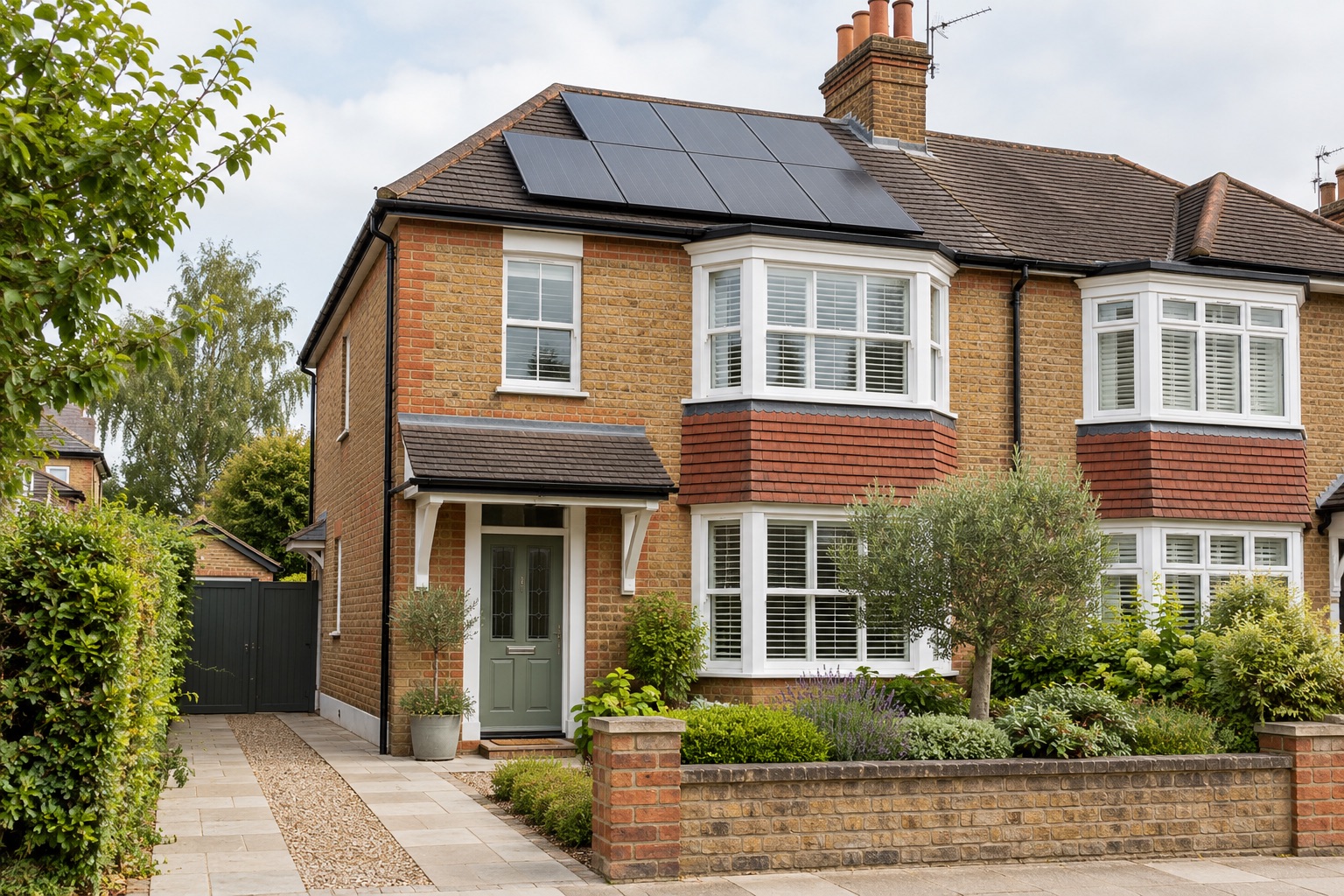
Illustrative home with roof-mounted solar panels
Energy & Retrofit

Retrofit & Low-Carbon Planning

Retrofit and low-carbon planning explores how building improvements could fit together over time. The starting point is your property, existing systems and long-term objectives.

KNOW WHAT YOU ARE BOOKING

What is Retrofit & Low-Carbon Planning?

Retrofit and low-carbon planning develops a considered route for improving an existing property over time. It brings building fabric, ventilation, heating and possible renewable technologies into the same discussion. The aim is to avoid isolated decisions that conflict with later work and to create a sequence that fits the building and your priorities.

Illustrative property assessment scene

Inside this service

The agreed review considers the available assessment evidence, proposed measures, interactions and dependencies. It can identify where further surveys, heat-loss calculations or specialist designs are needed. Low-carbon heating should be considered in the context of the building and its heat distribution system. A planning review is not itself a final installation design.

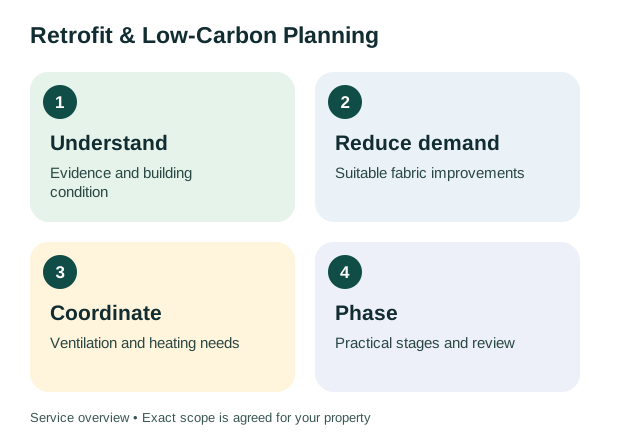
Understand: Evidence and building condition; Reduce demand: Suitable fabric improvements; Coordinate: Ventilation and heating needs; Phase: Practical stages and review
An illustrated guide to the key parts of this service.

When this service may help

Homeowners, landlords and property managers may need a plan before major renovation or a staged programme of upgrades. A property does not need to undergo every improvement at once. Planning is especially useful where budgets, occupancy or access mean work must be phased, or where traditional construction and permissions require careful consideration.

Getting ready for the assessor

Share your EPC, any retrofit assessment, existing plans and a description of the improvements you are considering. Explain the intended timescale, occupancy constraints and known building defects. Tell us about listed status, conservation considerations or leasehold restrictions where relevant. These can affect the order and feasibility of proposed work.

Using your completed report

The output sets out an agreed improvement route, key dependencies and decisions still requiring evidence. It can help coordinate quotations and avoid repeated disruption. Predicted savings and rating changes remain subject to assumptions and actual delivery. Keep a record of completed work and review the plan as the property, budget or available information changes.

Quotation after scope review

Arrange your Retrofit & Low-Carbon Planning

Share the address and the work you need so we can help you take the next step.

BEFORE YOU BOOK

Questions before you arrange a visit

Do I have to install a heat pump?

No. The plan considers suitable options for the building and your objectives. No single technology is appropriate for every property.

Why consider ventilation with insulation?

Changes to the building fabric can affect moisture and airflow. Ventilation needs should be considered as part of a coordinated design.

Can improvements be phased?

Yes. A useful plan identifies dependencies and sensible stages so early work supports later measures instead of creating avoidable rework.

Does planning include installation?

Installation, detailed design and required approvals are separate unless explicitly included. The quote will set out the agreed planning deliverables.

Included in your agreed instruction

  • Planning advice on the retrofit or low-carbon options defined in the quotation.
  • The agreed recommendations or planning outputs for that project stage.

Separate work & possible extras

Installation, detailed engineering design and guaranteed project savings require separate scope and agreement.

Before the visit

Provide plans, available energy reports, project stage and the improvements being considered.

Report timing & deadlines

Report timing is confirmed for the agreed instruction. Missing evidence, access limitations or further investigation can affect completion. If you have a deadline, contact us before paying so we can confirm whether it can be met.

Preferred appointment dates are requests until confirmed. Extra work or a change to scope needs agreement before it is carried out.