
Skip to content
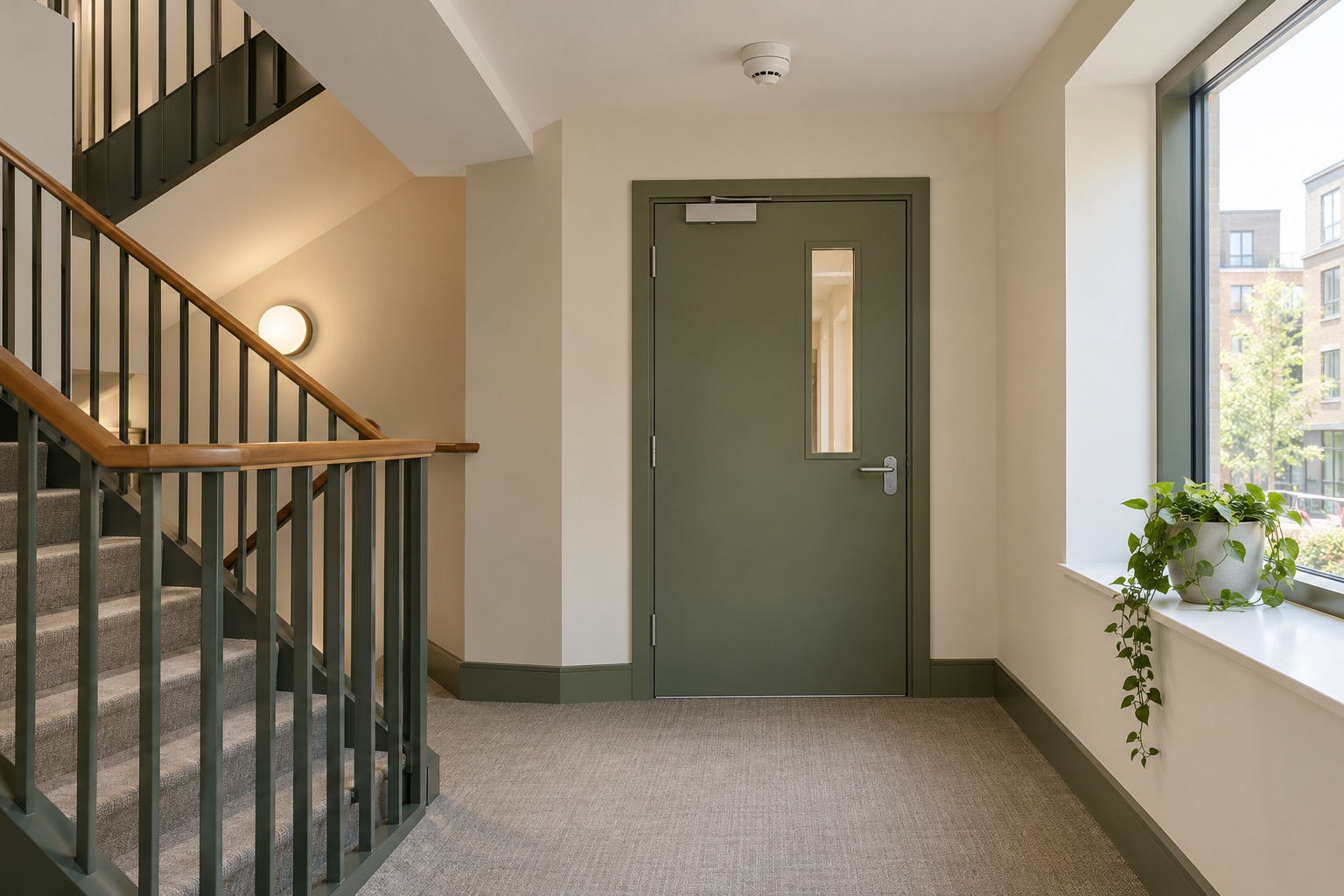
Illustrative communal corridor and closed fire door
Property Certificates

Fire Risk Assessment

Price on request

A fire risk assessment considers fire hazards, people who may be affected and the precautions at a premises. The building’s use and layout are central to setting the scope.

KNOW WHAT YOU ARE BOOKING

What is Fire Risk Assessment?

A fire risk assessment examines how a fire could start, who could be affected and what measures are needed to reduce the risk. It considers the premises and how people use them, rather than relying on a generic checklist. A useful assessment turns findings into clear actions that the responsible person can prioritise, assign and review.

Illustrative communal corridor and closed fire door

Inside this service

The review considers fire hazards, people at risk, escape arrangements, warning systems, emergency planning and relevant management controls. Access and the agreed assessment type determine what can be inspected. An assessment does not automatically include intrusive investigations, testing every fire door or specialist external-wall appraisal; these need separate scoping where required.

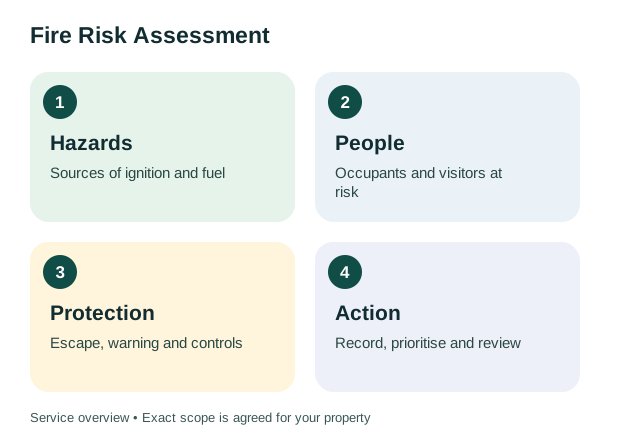
Hazards: Sources of ignition and fuel; People: Occupants and visitors at risk; Protection: Escape, warning and controls; Action: Record, prioritise and review
An illustrated guide to the key parts of this service.

When this service may help

Business owners, employers, building managers and those responsible for relevant common parts of residential buildings may need a fire risk assessment. The correct scope depends on the premises and responsibilities. Tell us whether you manage a workplace, block of flats, HMO or another building, and whether previous assessments or outstanding actions already exist.

Getting ready for the assessor

Have the previous assessment, building plans, alarm and emergency-lighting records and fire-safety procedures available. Arrange access to the relevant areas and a contact who understands day-to-day building use. Tell us about alterations, vulnerable occupants, changes in occupancy and known defects. Good records help the assessor understand both the building and its management.

Using your completed report

The report records findings and recommended actions. Agree responsibility and target dates for addressing them, keeping evidence of completed work. A fire risk assessment must be reviewed regularly and when relevant changes make it outdated. Commissioning the report does not transfer the responsible person’s duties or itself complete the actions it identifies.

Quotation after scope review

Arrange your Fire Risk Assessment

Share the address and the work you need so we can help you take the next step.

BEFORE YOU BOOK

Questions before you arrange a visit

Is this a fire safety certificate?

It is a risk assessment and action record, not a blanket certificate declaring every aspect of a building compliant.

How often should it be reviewed?

Review it regularly and after significant changes, incidents or evidence that the assessment is no longer suitable. The appropriate timing depends on the premises.

Will you check inside every flat?

The agreed assessment type and access determine the inspection scope. Explain the building layout and your requirements before booking.

How do I obtain a quote?

Provide the property type, approximate size, floors, use and available previous report. We will clarify the assessment needed before quoting.

Further reading: GOV.UK: Fire risk assessments.

Included in your agreed instruction

  • The fire risk assessment scope, premises and areas explicitly agreed in your quotation.
  • The written findings and recommended actions specified for the instruction.

Separate work & possible extras

Fire safety works, equipment servicing, specialist surveys and reassessments require a separate agreed scope.

Before the visit

Describe building use, occupants, shared areas and existing fire safety records. Confirm who controls access.

Report timing & deadlines

Report timing is confirmed for the agreed instruction. Missing evidence, access limitations or further investigation can affect completion. If you have a deadline, contact us before paying so we can confirm whether it can be met.

Preferred appointment dates are requests until confirmed. Extra work or a change to scope needs agreement before it is carried out.